
Crested Treeswifts
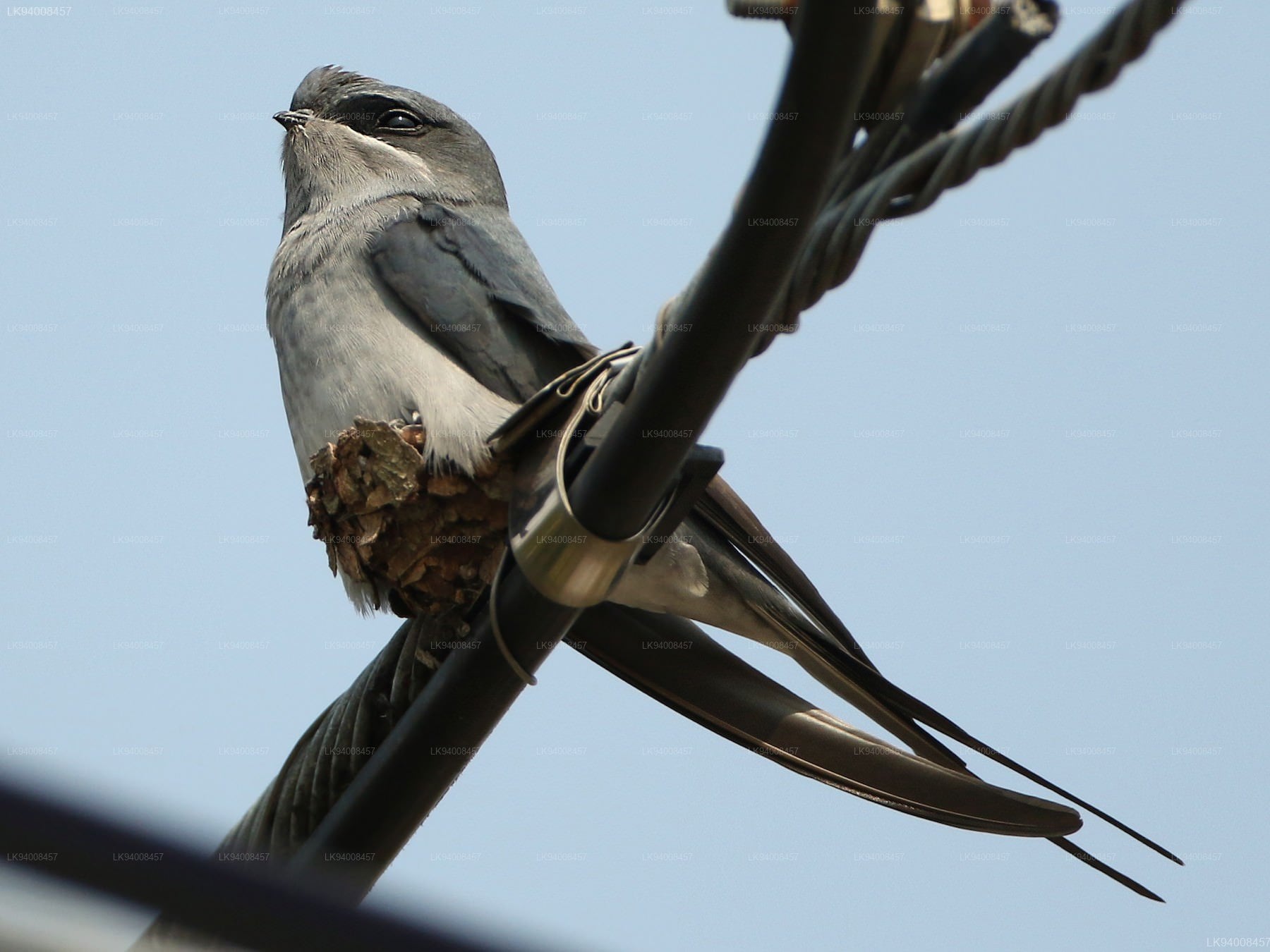
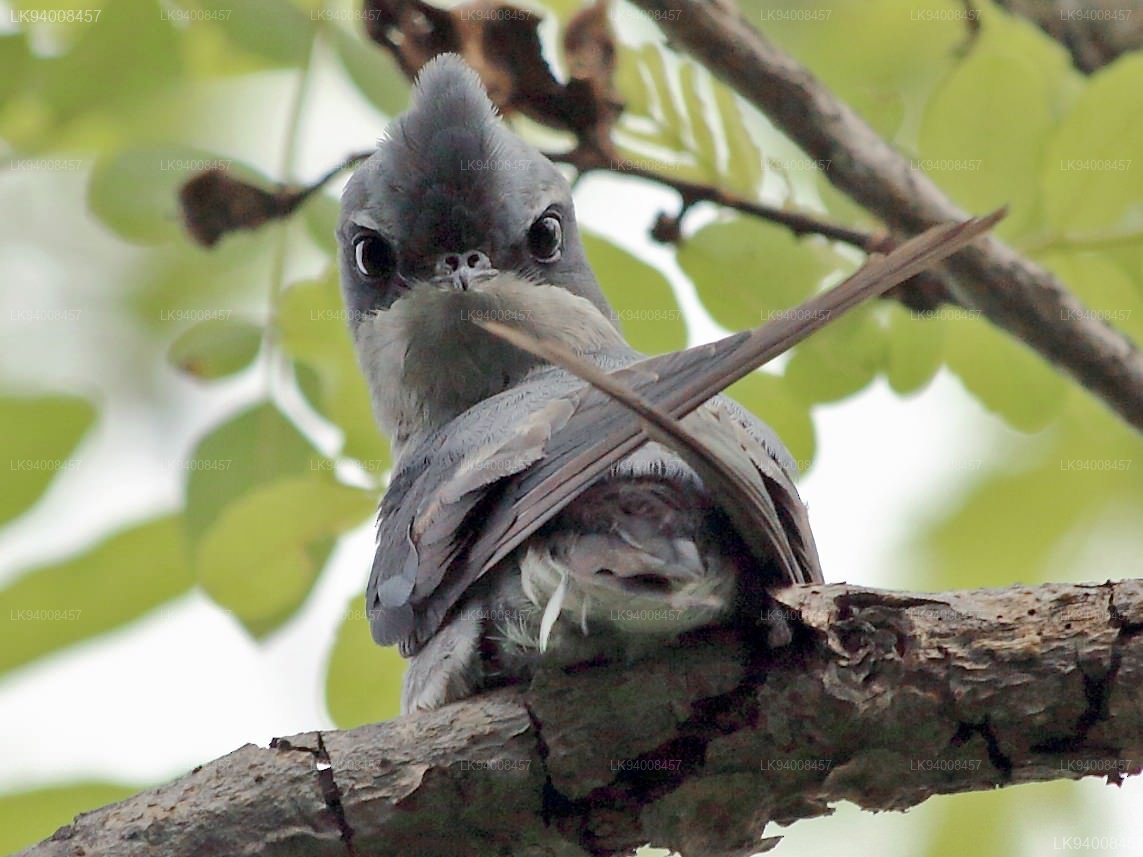
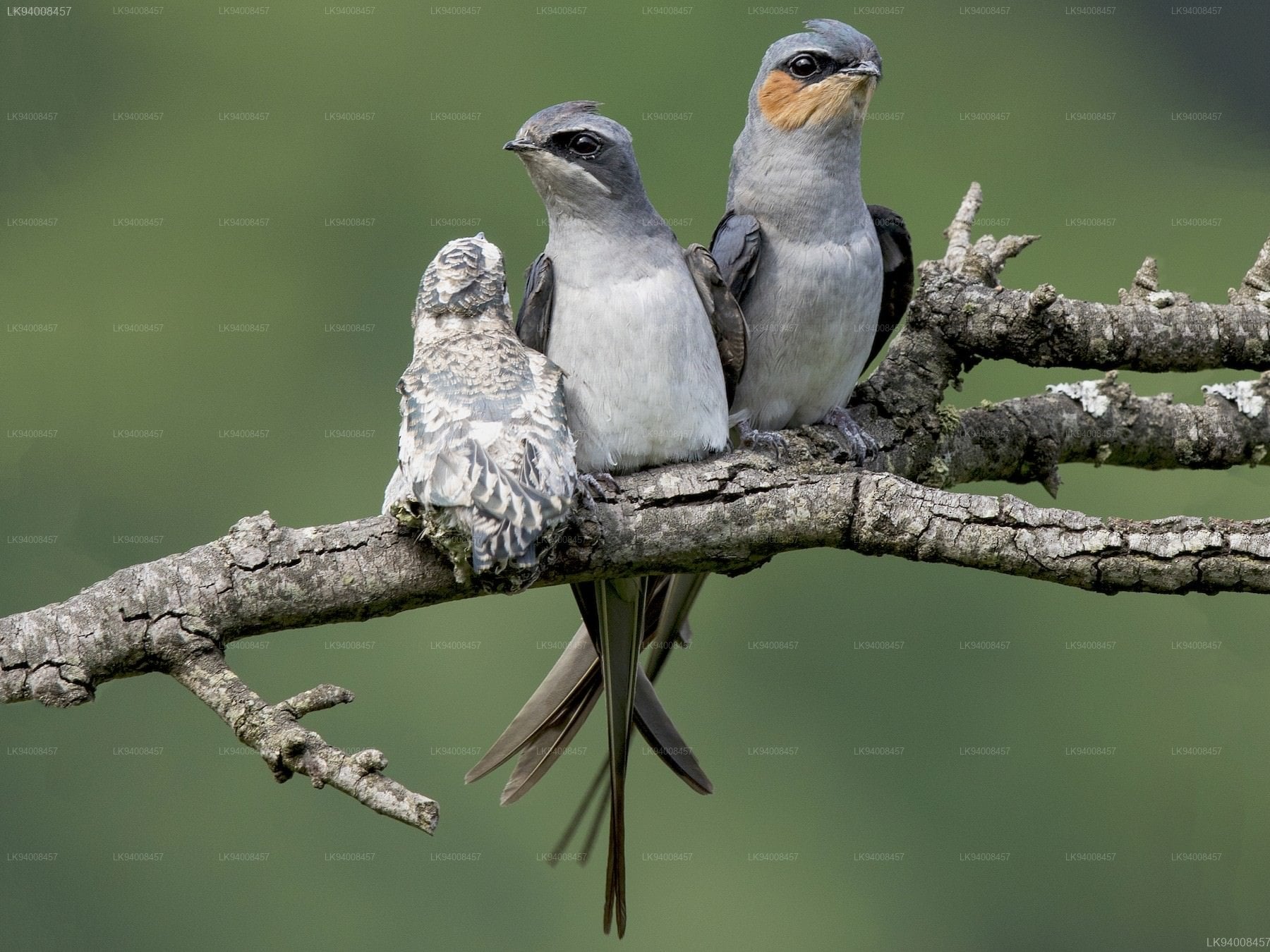
The crested treeswift is a large slender bird at 23 cm (9 in) length. This species is dove grey above and white below. The long swept-back wings are a darker grey above. This treeswift has a crest and a long, deeply forked tail. The adult male has orange cheeks and ear coverts with a narrow streak of white under the eye and a trace of a white supercilium. The female has a thin white stripe below the eye running along the cheek. Young birds have a dark grey head and wings but the feathers are edged in white and the rest of the soft plumage is much streakier than that of the adults. They are found in small groups that fly in wide circles in open forest, occasionally perching atop a tall and leafless tree. When perched they appear to sit very upright. The call of this species is a harsh kee-kyew or three note kip-kee-kep with emphasis on the middle note.
Taxonomy and systematics
The species was first given a binomial name with a description by Samuel Tickell in 1833. He collected specimens during his travels in the Borabhum and Dholbhum area while serving as a lieutenant in the 31st regiment of native infantry. He called it Hirundo coronatus and gave it the trivial name of Dhudka Swallow. He noted that it was not found throughout the year. The genus Hemiprocne was erected by Christian Ludwig Nitzsch in 1829 but the species has variously been incorrectly treated in the past in Dendrochelidon and Macropteryx. Jerdon, a quinarian, considered the species to be a link between the swifts and swallows on the basis of their silky plumage, uncharacteristic of the swifts. James L. Peters considered coronata as a subspecies of longipennis but it was reinstated as a full species based on plumage and structural differences (Prigogine's delta or distance between the fourth and fifth tail feather) and distributions of this and longipennis in the restricted sense. Dillon Ripley described a new subspecies dryas from a specimen obtained by Salim Ali from Rajpipla in southern Gujarat. He considered it to be paler grey on the upperparts than the known forms. This is however no longer considered a valid subspecies and represents variation within the widely distributed species. The genus is the sole member of the tribe Hemiprocnini which is, based on one morphological cladistics, considered to be more derived than the Cypseloidini (while some others have suggested that Hemiprocne is basal) and basal to the Collocaliini and more derived tribes Chaeturini and Apodini. The posterior portion of the sternum has two openings or foramina and the fifth secondary is absent (also known as diastataxic, a character sharedwith Cypseloides) whereas other swifts have the fifth secondary (and are said to be eutaxic). Like all swifts this species uses saliva to build its nest but it does not have all the toes facing forward as in the Apodini.
Distribution and habitat
The crested treeswift is a common resident breeder from the Indian subcontinent. It is found in India, Sri Lanka, Bhutan, Bangladesh, Nepal, Myanmar, Thailand, Vietnam, Cambodia, Laos and China. These are birds of open woodland and deciduous fo